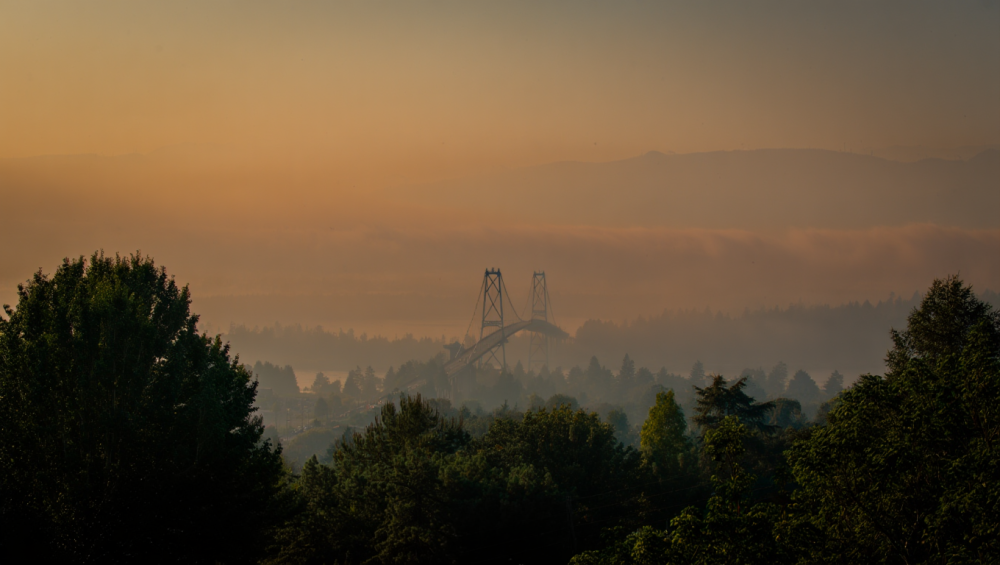
The Pacific Northwest is an area in the northwest corner, connecting the U.S. and Canadian borders. The area includes Washington, Oregon, Idaho, and British Columbia, as well as portions of southeast Alaska and western Montana. It is a very diverse region to say the least!
The jet stream from Canada can have a significant effect on the Pacific Northwest, including Washington, Oregon, and California, during El Niño or El Niña events. The positioning of the jet stream over Western Canada directs storm paths.
During phases like La Niña, the jet stream dips south, funneling moisture-heavy systems from the Gulf of Alaska and coastal Canada into Washington and Oregon.
For example, the NOAA (National Oceanic and Atmospheric Administration) reported, “During La Niña events, trade winds are even stronger than usual, pushing more warm water toward Asia. Off the west coast of the Americas, upwelling increases, bringing cold, nutrient-rich water to the surface.
These cold waters in the Pacific push the jet stream northward. This tends to lead to drought in the southern U.S. and heavy rains and flooding in the Pacific Northwest and Canada. During a La Niña year, winter temperatures are warmer than normal in the South and cooler than normal in the North. La Niña can also lead to a more severe hurricane season.
During La Niña, waters off the Pacific coast are colder and contain more nutrients than usual. This environment supports more marine life and attracts more cold-water species, like squid and salmon, to places like the California coast,”.
In Canada, climate differences are noticeable between the coasts. The East Coast experiences a more continental climate with cold winters and hot summers. At the same time, the West Coast, due to its proximity to the Pacific Ocean, enjoys milder, although wetter weather. This maritime influence results in lush, green landscapes year-round on the west coast compared to the more austere, snow-covered winters of the East.
Despite the weather, both coasts offer breathtaking landscapes and a wealth of outdoor activities, each in its own distinct way. The East Coast features the rugged beauty of Atlantic Canada, where you can explore the stunning Cabot Trail in Nova Scotia or experience the picturesque fishing villages of Newfoundland and Labrador.
The Great Lakes region, closest to my home state of Michigan, offers ample opportunities for freshwater activities such as boating and fishing.
On the West Coast, the scenery is characterized by towering mountains, rainforests, and the Pacific Ocean. Outdoor enthusiasts flock to this region for hiking, mountain biking, skiing, and snowboarding. The Pacific Rim National Park Reserve on Vancouver Island offers stunning vistas and a biodiverse ecosystem, while the Whistler Blackcomb resort area is a world-renowned ski destination.
U.S. cities with most natural disasters
Living in the Northeast region of the United States, surrounded by the Great Lakes with our Canadian neighbors close by, we have been fairly isolated from severe natural disasters. Sure, we do get affected by those frigid Canadian winds whipping through our Pure Michigan state, dumping lots of snow and cold weather our way. Still, I imagine the West Coast of Canada has quite a different effect on the Pacific Northwest region of the U.S.
First, let’s see which U.S. cities have the most natural disasters, though I think I know which states they’re in.
Climate Check reports that, “The United States weathers more natural disasters than any other country in the world. From hurricanes to tornadoes, flooding to fires, Americans are dealing with some costly natural disasters. Here is a list of the top five states in the U.S. that are hit hardest by natural disasters each year.
5. Florida
4. Louisiana
3. Oklahoma
2. California
1. Texas,”.
They go on to note, “Texas takes the top spot for the state most prone to natural disasters. In 2017, Hurricane Harvey wreaked havoc on the state, and it has been described as the worst natural catastrophe in its history.
The Lone Star State has also seen floods, tornadoes, severe ice storms, and drought, with over 255 federally declared disasters since 1953. Every year, at least one major catastrophe event is declared in the state of Texas.
As far as costly natural disasters go, Texas has experienced 94 billion-dollar storms since 1980.
The U.S. is one of the most dangerous countries to live in, weather-wise. More than 80% of weather-related disasters are concentrated on the North American continent. The unique geography of this country makes for unprecedented natural calamities that result in huge financial costs and loss of life. No other nation has as many types of natural hazards as the US.,”.
States with the least natural disasters
Ever since I was a little girl, I wanted to live in California – the U.S. state with tall palm trees, the Pacific Ocean, mountains, thousands of acres of forest lands, and a thriving music industry scene where I was sure I would be discovered and given a recording contract which would bring me instant fame, glory, and a lifestyle I could get accustomed to quickly.
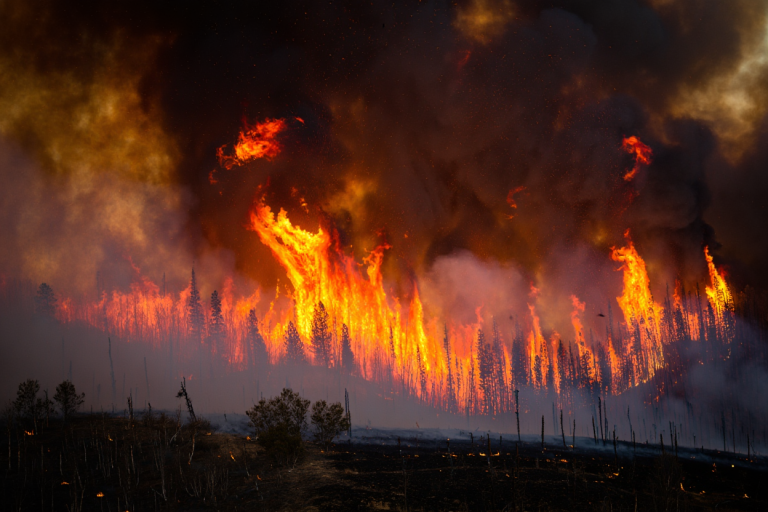
As I became an adult and became aware of the cost of living and the frequency of wildfires, earthquakes, mudslides, and floods that create havoc on Californians, my dreams changed.
I quickly became grateful to live in such a beautiful state as Michigan, the number one state in the U.S., consistently ranked among the safest, avoiding major hurricanes and fault lines, with infrequent tornadoes.
According to the geography experts at the World Atlas, “When it comes to a country as geographically wild as the United States, natural disasters occur with varying frequency and ferocity. California is the most dangerous state, considering it has witnessed 272 declarations of disaster in the past 20 years, according to FEMA. Delaware is arguably the safest state in the United States, with just 13 occurrences of natural disaster since 2004, with Michigan and Maryland closely behind at 14 and 18 incidences, respectively.
State – Incidents
- Delaware 13
- Michigan 14
- Maryland 18
- Wisconsin 19
- Rhode Island 20
- Indiana 21
- Ohio 21
- Pennsylvania 23
- Wyoming 24
- Connecticut 26,”.
Okay, well, we are the number two state, but close enough!
Pacific Northwest countries
In conclusion, no matter if you’re drawn to the rugged Pacific Northwest or the calmer Great Lakes region, geography truly shapes both the risks and rewards of where we call home.