When large commercial buildings have flat roofs, harsh winter weather poses a significant concern. Especially melting snow, as it can turn into an ice dam. Ice dams have the potential to cause significant damage not only to the roof but also to the building if they break and leak inside.
If water or flood damage has occurred in the building as a direct result of an ice dam, then a professional roof repair contractor should be contacted immediately to prevent additional damage.
Water that backs up behind an ice dam can leak into the building, causing damage to walls, ceilings, insulation, and other areas. Additionally, when the roof doesn’t drain properly, snow, ice, and water remain trapped on the roof, adding loads that put your roof at greater risk of collapse.
- Commercial roof maintenance during the winter months
- Regular snow and ice removal
- Beware of ice dams on a commercial roof
- Monitor freezing and melting cycles
- Keep drainage systems clear
- Make sure all vents and chimney pipes are clear of snow or ice
- Leave winter commercial roof maintenance to the professionals
According to the University of Minnesota, “Ice dams can be prevented by controlling the heat loss from the home.
- Remove snow from the roof. This eliminates one of the ingredients necessary for the formation of an ice dam.
- A “roof rake” and push broom can be used to remove snow, but may damage the roofing materials.
- In an emergency situation where water is flowing into the house structure, making channels through the ice dam allows the water behind the dam to drain off the roof.
- Hosing with tap water on a warm day will do this job.
- Work upward from the lower edge of the dam.
- The channel will become ineffective within days and is only a temporary solution to ice dam damage.
Long-term action
- First, make the ceiling air tight so no warm, moist air can flow from the house into the attic space.
- After sealing air leakage paths between the house and attic space, consider increasing the ceiling or roof insulation to cut down on heat loss by conduction,”.
*Note: All content within this article is meant for informational purposes only and is in no way a replacement for professional contractor advice or support. Seek immediate and appropriate care from a professional when necessary.
Snow on roof safety tips
FEMA suggests considering the following risks and safety issues when there is too much snow on a roof, “Key Safety Issues and Risks Snow accumulation in excess of building design conditions can result in structural failure and possible collapse. Structural failure due to roof snow loads may be linked to several possible causes, including but not limited to the following:
• Unbalanced snow load from drifting and sliding snow. When snow accumulates at different depths in different locations on a roof, it results in high and concentrated snow loads that can potentially overload the roof structure.
• Rain-on-snow load. Heavy rainfall on top of snow may cause snow to melt and become further saturated, significantly increasing the load on the roof structure.
• Snow melt between snow events. If the roof drainage system is blocked, improperly designed or maintained, ice dams may form, which creates a concentrated load at the eaves and reduces the ability of sloped roofs to shed snow. On flat or low slope roof systems, snow melt may accumulate in low areas on roofs, creating a concentrated load.
• Roof geometry. Simple roofs with steep slopes shed snow most easily. Roofs with geometric irregularities and obstructions collect snow drifts in an unbalanced pattern. These roof geometries include flat roofs with parapets, stepped roofs, saw-tooth roofs, and roofs with obstructions such as equipment or chimneys,”.
Specifically, flat roofs are susceptible to collecting debris such as leaves and twigs. These can get blown into drains and block them, preventing them from efficiently removing water, leading to leaks when melted snow has nowhere to go.
In addition to debris blocking drains, flat roofs can also experience leaks when snow melts due to the formation of ice dams. When melted snow refreezes at the edges of the roof, it obstructs proper drainage. As a result, water accumulates and seeps into the building through any vulnerable areas, such as cracks or damaged flashing.
The weight of accumulated snow and ice on a flat roof can also contribute to leaks. Excessive loads from heavy snowfall can stress the structure, leading to weak points in the roofing material or to leaks at seams.
Furthermore, winter temperature fluctuations play a significant role in roof leaks. The continuous freezing and thawing cycle can cause roofing materials to expand and contract, potentially compromising their integrity. This repeated movement stresses seals and joints, increasing their vulnerability to leakage.
Regular maintenance is crucial throughout the winter months to prevent these issues caused by melting snow on flat roofs. Clearing drains of debris should be done routinely to ensure efficient water runoff from the roof. Checking for signs of damage, such as cracks or deteriorated sealants, will help identify potential leak sources early so they can be addressed promptly.
Should I break an ice dam on my roof?
No, do not break or smash an ice dam on a roof using a hammer, chisel, or shovel, because it could severely damage a roof, shingles, or the gutters. Instead, contact a professional contractor immediately, as they will know what to do or advise you on what to do.
Should an ice dam break and cause a roof collapse, please do not attempt to do any repairs on your own. First things first – hopefully, no one will be in the building if this unfortunate incident happens.
Second, if you are inside during the collapse, call 911 immediately. Next, consider the safety of anyone who might still be in the building.
Next, make sure all people who may have been inside at the time of the collapse are safe and out.
Finally, if there are any injured people, obviously, it is essential to seek medical attention as soon as possible.
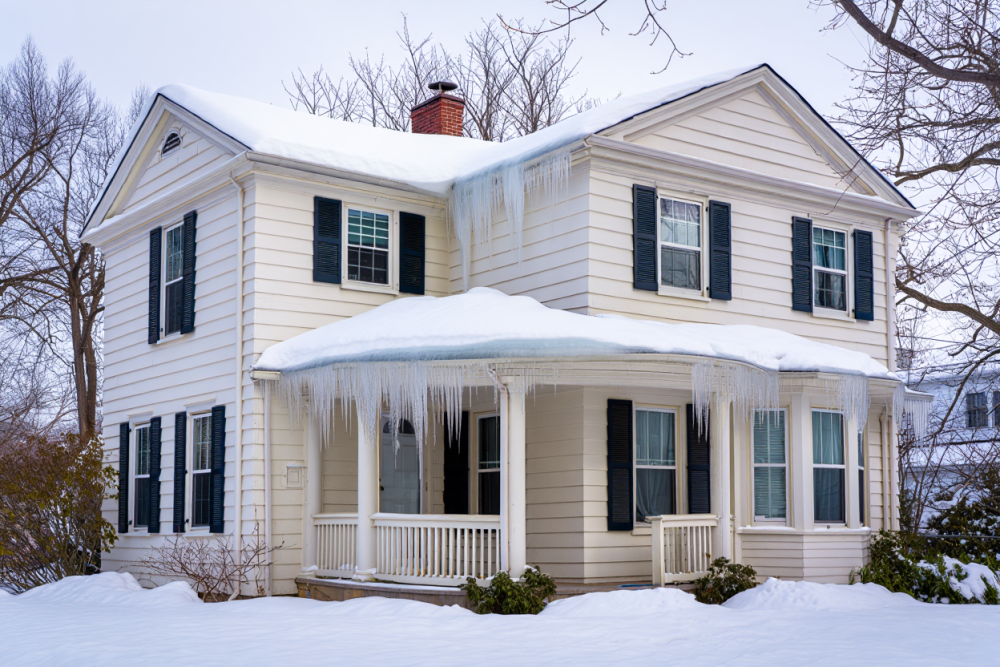
Ice dam on roof
In conclusion, staying proactive with winter roof maintenance is the best defense against ice dams. With proper care, monitoring, and professional support, you can protect your building, prevent costly damage, and keep everyone inside safe all season long.