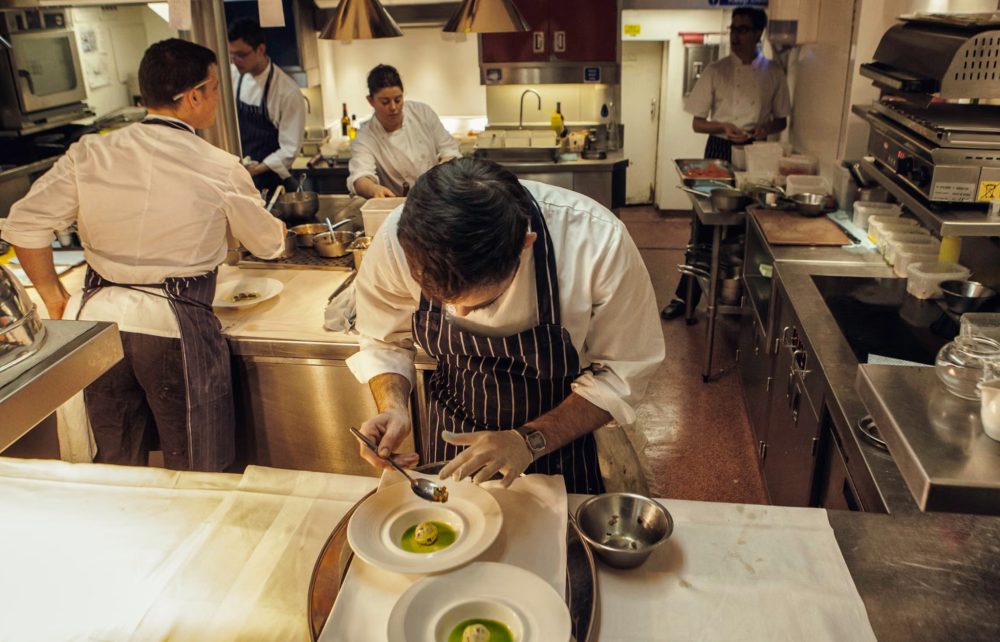
If you have ever worked in the restaurant industry, you know that workers in restaurants are a rare breed. It takes a special kind of personality to make the cut in restaurant work, whether you are in the back of the house (the kitchen) or the front of the house (the dining area).
As a server or bartender, you must have thick skin, so to speak, to be able to handle the “nothing will ever make them happy” customers and the cranky chefs in the kitchen. You must be quick on your feet, highly organized, extremely knowledgeable of what your restaurant offers, and be able to compartmentalize your feelings during your shift.
When I was a worker in the restaurants, my motto was to remember that whatever was going on in my life, before I walked into the restaurant, I had to put on my game face, smile, act as if I was on a Broadway show, and understand that “the show must go on.”
For more than fifteen years in the restaurant business, I worked at over twenty different restaurants, but one in particular has stood out as a favorite. In fact, my son works there today (per my suggestion), and he loves working there too.
They really know how to take great care of their workers at all of their restaurants across the Southeastern Detroit Metropolitan Area. For example, here are some things they do for their employees:
- Summer trip to Cedar Point with transportation from Michigan to Sandusky, Ohio, all expenses paid, which includes the charter bus being loaded with food and drinks
- Extensive training for waitstaff, including TIPS certification (TIPS means you have completed a Training for Intervention Procedures/TIPS training course. TIPS is a program that teaches people how to prevent alcohol abuse, underage drinking, and drunk driving)
- Winter Holiday party where the owners and managers serve dinner and give gifts to the kitchen crew, bartenders, and waitstaff
- Fall trip to cider mills, all expenses paid, including the bus trip loaded with food and drinks
- All servers and bartenders are divided into teams, with one manager as the coach, and every month, the team with the highest sales wins an all-expenses-paid night out to a competing restaurant, where they secretly critique and bring back ideas to implement into the restaurant’s strategies
Unfortunately, that is not the case for most restaurant workers and restaurants because most establishments in the restaurant industry are very difficult to work at. In fact, there is a nonprofit organization dedicated to igniting necessary changes.
According to Restaurant Workers’ Community Foundation, an advocacy and action nonprofit created by and for restaurant workers, “We are a nationwide community dedicated to making the restaurant industry more hospitable to everyone.
By addressing quality-of-life issues that disproportionately affect restaurant workers – 40% of whom live on poverty-level wages – we hope to strengthen the workforce and increase opportunities for advancement in the industry to more people. The restaurant industry is notorious for low wages, poor job mobility, high turnover, and burnout. Structural and cultural issues within the industry decrease quality-of-life and make long term work in the industry unsustainable for many. But it doesn’t have to be that way.
That’s why we’re focused on: Wage Fairness and Career Ladders; Gender Equity and Sexual Violence; Racial Justice and Support for the Immigrant Community; Mental Health and Substance Abuse,”.
Sadly, sexual abuse and harassment run rampant in the restaurant industry, and I experienced it on many occasions but felt I never had a voice or a place to go for help. I wish I had known then about Restaurant Workers’ Community Foundation.
Sexual harassment in restaurants
Harvard Business Review research shows that, “Scores of recent stories have exposed the pervasiveness of sexual harassment in industries such as Hollywood, tech, politics, and academia. Less attention has been given to lower-paying jobs, such as those in the service and hospitality industry, where the problem runs rampant,”.
Not only did I experience sexual harassment from some of the creepy kitchen guys and managers old enough to be my father, but from the male customers as well. A lot of these male predators were married too, which adds another layer of disgusting behavior and disrespect towards women and girls.
From cornering us in the cooler, rubbing up on us in tight spaces in the kitchen, to randomly massaging our shoulders, upper back, and neck (unsolicited, by the way) while we were waiting for drinks or food is just the tip of the sexual assault (SA) iceberg.
A law firm reports that, “Sexual harassment may plague the restaurant industry more than any other.1 Habitual harassment of service workers can occur by supervisors, co-workers, and customers. Complaints by servers to their managers, reporting a customer’s inappropriate behavior, can often be tossed to the side as the well-known slogan ‘the customer’s always right’ forces the server to tolerate the behavior.
A recent study by the Restaurant Opportunities Centers United found that two thirds of women in the restaurant industry had experienced sexual harassment from managers. Moreover, 80% of the women surveyed had experienced sexual harassment from co-workers, and 80% experienced sexual harassment from customers.
‘Women in tipped occupations experience the highest rates of sexual harassment from management, co-workers, and customers compared to men and their non-tipped counterparts.’ Although restaurant workers make up only 7% of women in the workforce, restaurant workers accounted for 37% of the sexual harassment complaints brought by women to the EEOC,”.
What are the four types of sexual harassments?
Regrettably, I can recount many ways I have been sexually harassed. To be clear, sexual harassment is any unwanted behavior of a sexual nature that makes a person feel uncomfortable, offended, or unsafe at work or in public. It also violates civil rights laws when it creates a hostile environment or affects job status.
The one time I actually reported a sexual harassment instance I endured over several months from a kitchen manager, it went nowhere. No repercussions – not even an essay. After that, he made sure the food I ordered for customers was either wrong, running behind, or “forgotten” completely. He retaliated like a damn child.
Paradigm shares, “Here are four types of sexual harassment:
- Unwanted Sexual Advances
Unwelcome sexual advances, including requests for sexual favors, touching, or physical contact (especially of a sexual nature), are clear indicators of sexual harassment.
- Verbal Harassment
Verbal harassment (derogatory comments, suggestive jokes, or innuendos) is another common form of sexual harassment.
- Non-Verbal Harassment
Non-verbal harassment, such as leering, staring, or making suggestive gestures, is a form of harassment that can be just as harmful as verbal harassment.
- Retaliation
Retaliation is a serious form of sexual harassment and is illegal. Retaliation can take many forms, including termination, demotion, or other forms of punishment for resisting advances and/or reporting sexual harassment,”.
Workers in restaurant
In conclusion, restaurant workers deserve respectful workplaces, fair opportunities, reliable support, and recognition for the resilience, skill, and care they bring to every demanding shift.