In the summer, we are infinitely blessed with long hours of sunlight in Michigan, from when the sun rises at about 5:30 in the morning to when it sets at almost 10 p.m. Come November, when Daylight Saving Time ends, we start to get dark around 6 p.m.
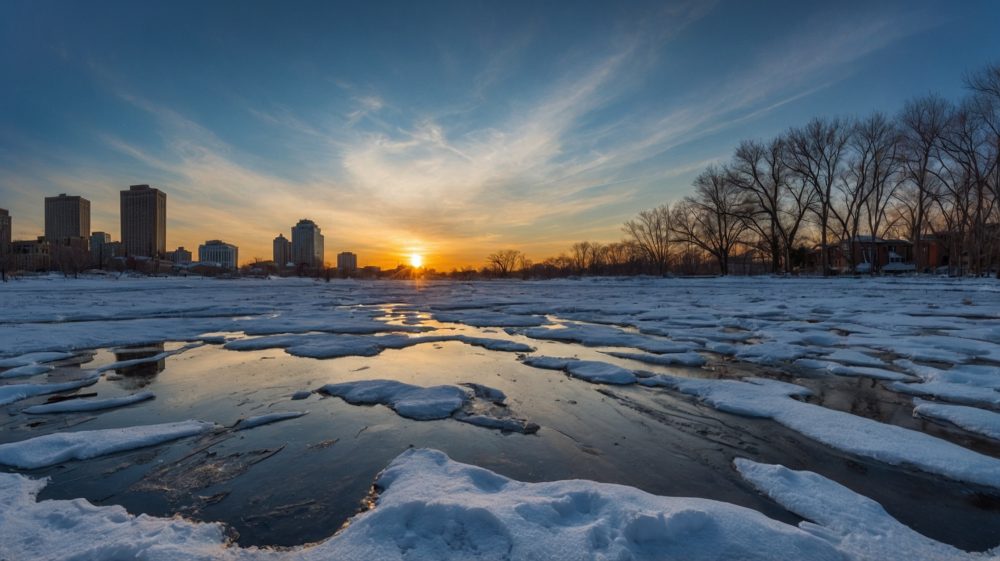
It’s really crappy here in the winter when the sun rises around 7:30 a.m. and sets around 5:30 p.m. It’s exhausting when we go to school or work in the dark and come home in the dark just before the sun sets. Oh well, that’s what we have the holidays for, to bring some joy in an otherwise dreary situation.
It is also why it is imperative for some of us to head Up North (upstate) Michigan to stay at a hotel with an indoor waterpark or one with a large pool, as it’s essential to survive the dreary days and long nights of winter. Unless you are fortunate enough to vacation somewhere sunny like Florida or California. Either way, getting out of town to decompress anywhere is still a healthy action.
However, there must be other states that lack sunshine during the long winter months in the north. Well, the experts at the Farmer’s Almanac have developed a list that ranks from best to worst:
- Connecticut
- Montana
- Ohio
- Michigan: Many of the cloudiest states share a border with one of the Great Lakes, but Michigan is virtually surrounded by them. As cold winds rush over Lake Superior and Lake Huron during the winter, lots of condensation forms, bringing clouds and tons of lake effect snow. Because of this and other climate factors, no matter where you live in Michigan, you’re only likely to see between 65 and 75 clear days each year.
- West Virginia
- Oregon
- New York
- Alaska
- Vermont
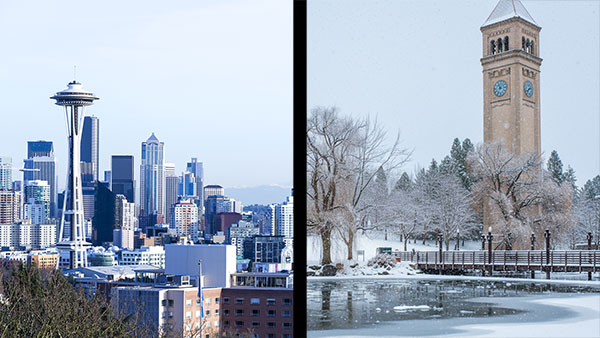
- Washington
At least we (Michigan) are not as bad as I thought, and now, I know why. I will gladly take the cloudy days to be surrounded by the Great Lakes any day or any season!
Polar night in Alaska
Being a Michigander, I believe it wouldn’t be difficult to adjust to Alaska’s cold weather. Granted, it’s not that cold in Southeast Michigan, even in the dead of winter, but overall, it wouldn’t be that difficult for this native Detroiter to adapt. The thing that would get me down living in Alaska would be the period of darkness – absolutely no sun at all.
According to Alaska’s official state website, “On the shortest day of the year (December 21, winter solstice), you’ll find a range of daylight hours depending on where you are:
| Town | Location | Sunrise | Sunset | Total Daylight |
| Juneau | Inside Passage (Southeast Alaska Panhandle) | 8:45 a.m. | 3:07 p.m. | 6 hours 22 minutes |
| Anchorage | Southcentral | 10:14 a.m. | 3:42 p.m. | 5 hours 28 minutes |
| Fairbanks | Interior | 10:50 a.m. | 2:41 p.m. | 3 hours 42 minutes |
| Utqiagvik (formerly Barrow) | The Arctic: 330 miles north of Arctic Circle | January 23 | November 18,”. | 67 days of darkness |
My goodness, that is a lot of darkness – I could never handle that many hours without the sunlight. However, if you look closely, it’s really not that bad unless you are in Barrow. Most of Alaska still experiences at least a few hours of sunlight, even on the shortest days.
As the largest state, it depends on how the winter solstice is experienced there. For example, as shown in the chart above, Barrow is the northernmost place with sixty-seven days of darkness.
Look to the middle of the state, and there are almost four hours of daylight during the solstice, with cities like Anchorage in southcentral and Juneau in the southeast each getting between five and six-and-a-half hours of daylight. In Michigan, we get about nine hours during the winter solstice.
What time of the year does the sun not go down in Alaska?
In Utqiaġvik, the northernmost city of Alaska, the sun rises on May 10th and does not set until August 2nd for a total of eighty-five straight days. Fairbanks sees 24 hours of daylight for seventy days from mid-May to around mid-July.
In theory, I would love this, but in reality, I am sure I would not get much sleep as my internal clock would take a very long time to adjust, apparently, because we humans have a natural circadian rhythm that can be thrown off kilter by too much sunlight or darkness.
It’s fascinating how the Alaskan lifestyle adapts to these extreme variations of daylight. People who live there have developed many strategies to cope with periods of prolonged darkness and continuous daylight.
For instance, during the endless nights, many Alaskans use light therapy lamps to combat Seasonal Affective Disorder (SAD), a condition often caused by lack of sunlight, which can lead to depression and lethargy.
Conversely, during the summer months, when the sun scarcely sets, blackout curtains become a necessity for many households. These curtains block out the perpetual daylight, creating a conducive environment for sleep.
It’s incredible to think that while Michiganders are just beginning to enjoy longer days, Alaskans are transitioning to their period of endless sunlight. Oh, I wonder how parents of young children make it through bedtime during this period – I feel for them just thinking of it!
The culture and activities in Alaska also shift with the changing daylight. In the winter months, indoor activities and community gatherings often increase to keep spirits high. There’s a strong sense of community as families and neighbors come together to celebrate traditions, share stories, and support one another. Winter sports like dog sledding, ice fishing, and skiing have become more prevalent, providing outdoor enthusiasts with ways to enjoy the unique environment.
Come summertime, when the landscape and social activities transform drastically with the constant sunlight, folks there enjoy hiking, fishing, and wildlife spotting. The Midnight Sun Game, a baseball game held in Fairbanks where no artificial lights are used, is a true testament to how Alaskans embrace their unique daylight circumstances.
Least sunny states
In conclusion, despite dreary winters, both Michigan and Alaska show how communities adapt to extreme shifts in daylight, proving that resilience, creativity, and joy thrive even under cloudy skies.